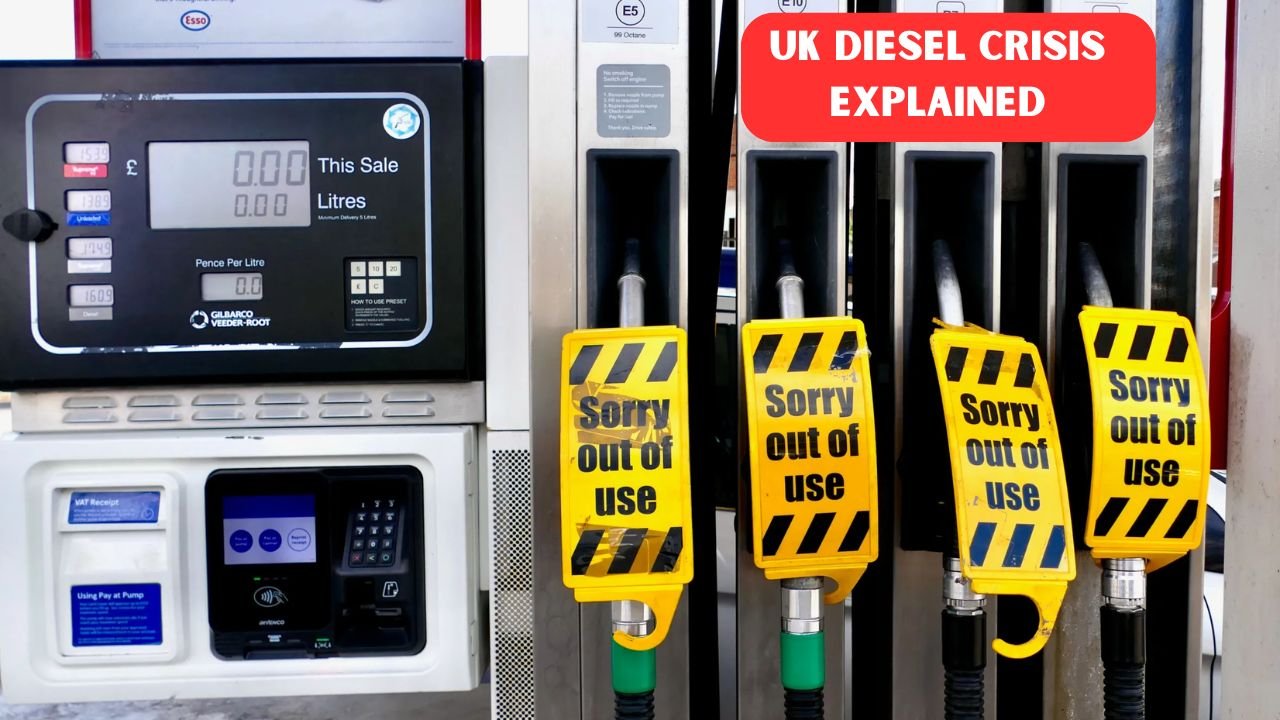
The United Kingdom has been placed in the middle of a complicated energy story. Because of this, U.K. citizens and businesses have had to change how they use forecourts. Something that was once a normal daily routine has turned completely to the opposite. A daily utility has turned to a daily economic indicator. There is a mixture of geopolitical tensions, trade position shifts, and a domestic infrastructure that is not able to meet the rapid decarbonisation goals. The diesel market has been a focal point of national concern in early 2026. This is not the first time diesel prices have impacted the cost of living. To understand the high price of diesel and the supply lines, one needs to understand the local petrol station, the complex systems of global energy production, and the continuing effects of the war in Eastern Europe.
The End of Reliance on Russian Energy as a Geopolitical Catalyst
The most substantial impact on the UK diesel market in decades came from the UK government’s rapid and essential disconnection from Russian energy exports due to the Russian invasion of Ukraine. Before 2022, the UK and the rest of Europe depended on Russian refineries for “middle distillates,” the category of fuel that includes diesel. With the sanctions in place and the UK government’s commitment to a complete phase-out of Russian oil products, there was a required, rapid realignment of supply chains. This diversion of trade routes integrated the UK into a highly competitive global market for fuels from the Middle East, India, and the United States. While this was a positive step from a national security and ethical trading standpoint, the logistical costs were enormous. Transatlantic and Suez Canal fuel shipments have a much higher shipping cost than fuel shipments from nearby Baltic ports. The increased shipping distance translates into higher prices directly passed onto UK couriers and commuters.
Overall Uncertainty in UK Markets and the Global Shortage in Diesel Refining
Outside the direct consequences from the war, the UK is also contending with the global shortage of refining capacity which has made diesel, compared to petrol, more expensive than in previous years. Over the last ten years, a large section of the world has pulled investment from refining fossil fuels due to anticipation of a green transition. However, diesel remains crucial as it fuels most of the UK’s heavy goods vehicles, agricultural machinery, and delivery fleets. This creates a “refining squeeze”. Therefore, despite crude oil prices being relatively stable, the cost of refining that oil into diesel is high. The table below shows a sample of the transition of net UK fuel components over the years and demonstrates how taxes and refining margins are becoming more significant in the final price.
| Year (Average) | Cost of Crude Oil (Per Liter) | Cost of Refining & Delivery | Cost of Fuel Duty & VAT | Cost of Fuel per Liter at the Pump |
|---|---|---|---|---|
| 2021 | 38p | 15p | 82p | 135p |
| 2023 | 52p | 28p | 88p | 168p |
| 2025 | 55p | 32p | 91p | 178p |
| 2026 (est.) | 58p | 35p | 94p | 187p |
Economic Ripple Effect and Cost of Living
The UK diesel crisis is more than just an issue for motorists, it is a stress point for the entire British economy. Every increase in the cost of diesel fuel directly increases the price of groceries in supermarkets, building materials, and other consumer products. This has been the primary cause of the cost of living crisis. Many small haulage operators have been forced to take on extra fuel charge surcharges and pass the rest of the cost on to the consumer. The Government has implemented fuel duty freezes, but these are very much temporary fixes. The UK economy is highly sensitive to the overseas supply of diesel fuel. This is a direct result of the UK economy’s dependence on imported finished diesel.
Environmental Policy and the Future of Heavy Transport
Recent events have kicked off more conversations around the UK’s Net Zero targets. For example, the government now mandates the sale of new diesel cars and vans to be finished by 2030 (and heavier vehicles a little after that), meaning there will be a period of “limbo” for the industry. Many fleet operators are reluctant to spend money on new electric or hydrogen-cell heavy goods vehicles that, of course, are very new to the industry. However, they are being forced to spend more and more money to maintain traditional internal combustion vehicles. Because of this, many diesel users are at their most expensive within this transition period. There are many new regulations being designed to phase the diesel fuel out and there are no new diesel infrastructure investments being made. For consumers and for the market, we are seeing an increased price for diesel fuel and a decreasing availability of diesel cars on the secondary market for consumers.
Conclusion: Using Pricing Intelligence
Diesel prices and availability are concerning in the UK for the foreseeable future. Although Middle Eastern partnerships will strengthen and the supply chain’s resilience will improve, there are still no signs of low prices and cheap diesel coming back. For the foreseeable future, a combination of UK domestic storage, new import partners, and less reliance on fossil fuels in the transport sector will fuel (pun intended) the energy security of the UK. For now, the British people need to make the most of what is available and adapt their operations. The UK is beginning to develop processes that thrive within the new high cost energy environment (e.g., road, and commercial vehicle (HGV) route optimization, and the moving to HVO (Hydrotreated Vegetable Oil) fuel). The diesel mess emphasizes that fuel prices are a function of both the borderless economy and international relations.
FAQs
Q1 Why is diesel fuel priced higher than petrol in the UK?
The international demand for and reliance of industry and shipping on diesel fuel is high. Therefore, UK refineries have a low capacity for the conversion of crude oil to diesel. This drives up the necessary imports.
Q2 Have prices changed irreversibly as a result of the ban on Russian oil?
Yes. Moving fuels from the top left of the supply and demand curve to the bottom increases costs. The UK must compete in a high demand, high priced international market and pushes in distant supply.
Will diesel prices ever come back to pre-2020 levels?
Most analysts believe this is unlikely because of permanent changes in refining costs, increased environmental taxes, and the continuing shift to electric vehicle infrastructure.